

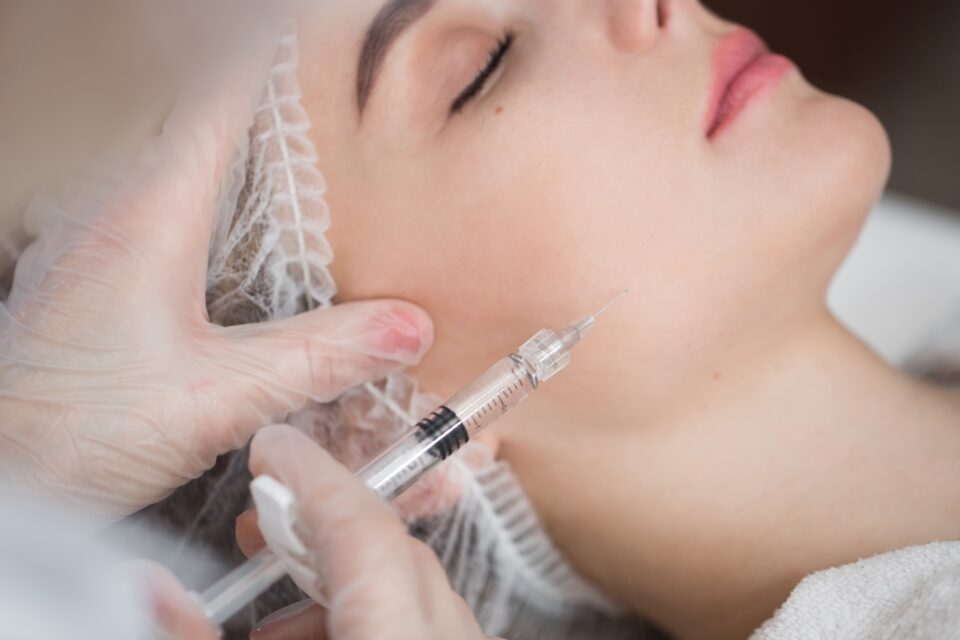
A 561-person randomized trial strengthens the skin-quality evidence base of Sodium Hyaluronate injection, but its untreated comparator cannot separate injection-specific effects from expectation and procedural effects.
What did researchers study?
A prospective multicenter trial published online on 13 October 2026 in Aesthetic Plastic Surgery evaluated a non-cross-linked sodium hyaluronate composite injection intended to improve skin appearance and quality. Researchers in China randomized 561 participants to treatment or a blank control group. The evaluators were blinded, according to the published abstract.
The primary endpoint was improvement on the Global Aesthetic Improvement Scale, a clinician-rated assessment of appearance. Investigators also examined several skin-quality measurements, participant satisfaction and adverse events. The report is especially relevant because many skin boosters are marketed using small uncontrolled series rather than larger randomized studies.
What were the results?
The published abstract reported investigator-rated improvement in 90.00% of treated participants versus 11.90% of controls, with a reported P value below 0.0001. Secondary measurements and patient-reported satisfaction also favored treatment. Most reported treatment-emergent adverse events were mild to moderate, temporary and local, with no unexpected safety signal described in the abstract.
These are encouraging findings for the studied formulation and schedule. They should not be generalized to every non-cross-linked hyaluronic acid product, injection depth or treatment protocol. The abstract does not provide enough detail to calculate longer-term durability or independently assess all adverse events.
Why the comparator matters
The trial used a blank, untreated control rather than a sham injection or saline injection. That choice can establish a difference from no treatment, but it does not fully account for the effects of a procedure, attention from clinicians, or participant expectations. Evaluator blinding helps reduce assessment bias but does not eliminate every source of bias.
The composite formulation also matters. A finding involving a multicomponent solution cannot be attributed solely to sodium hyaluronate unless the study design isolates its contribution. The exact product composition and injection regimen should be checked in the full paper before making treatment-specific recommendations.
What the study adds—and what it does not
The trial contributes unusually large randomized evidence to a field where objective measures, standardized endpoints and robust comparators are often limited. It suggests the studied injectable can improve short-term appearance compared with no intervention under trial conditions.
It does not establish superiority over established skin boosters, long-term clinical benefit, prevention of skin aging, or safety in all facial anatomical sites. The authors declared no conflicts of interest; the published page lists support from the Beijing Natural Science Foundation and a regional innovation fund. The full text was not freely accessible during this research pass, so detailed methods require review.
How to read the main endpoint
A Global Aesthetic Improvement Scale rating is clinically familiar, but it remains partly subjective. Investigators can agree that a face appears improved without demonstrating the same degree of change in hydration, elasticity, dermal thickness or patient-reported quality of life. The strongest interpretation would combine standardized photographs, validated objective measures and durable patient-centered results. For this reason, the 90% figure should always be presented as the specific investigator-rated GAIS improvement outcome rather than a universal success rate.
Original sources
Qian W, Zhang Y, et al. Aesthetic Plastic Surgery, online 13 October 2026: https://link.springer.com/article/10.1007/s00266-026-06320-1
DOI 10.1007/s00266-026-06320-1: https://doi.org/10.1007/s00266-026-06320-1
Source / evidence limitation: Peer-reviewed randomized study; abstract and publisher metadata verified.
Medical disclaimer
This article is published by Aesthetics.news for general information and educational purposes only. It does not constitute medical advice, diagnosis or treatment, and should not replace a consultation with a qualified healthcare professional. Treatments and outcomes may vary from person to person. Readers should seek advice from an appropriately qualified professional before making decisions about their health or treatment. In a medical emergency, seek immediate medical assistance.