

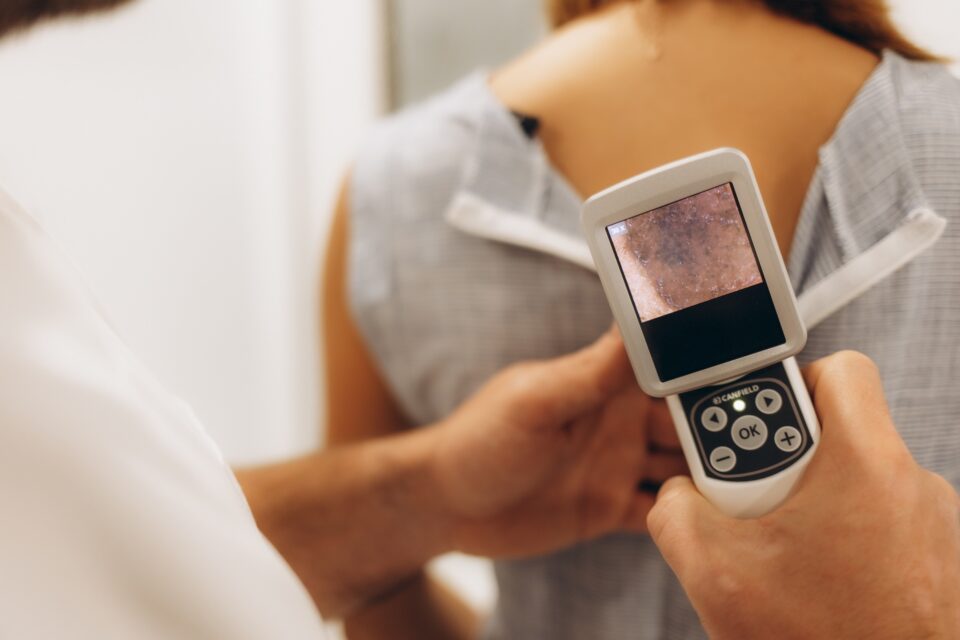
A newly published US regulatory order defines how software-aided devices may support physicians assessing suspicious skin lesions. The rules do not authorize autonomous cancer diagnosis.
A new FDA AI skin cancer device classification published on 30 October 2026 establishes special controls for software that helps physicians assess suspicious skin lesions. The US Food and Drug Administration placed this device category in Class II, while making clear that the technology is an adjunctive second opinion—not a standalone diagnostic system.
What exactly did the FDA change?
The final order adds a category to 21 CFR 878.1830 for prescription devices that analyze optical or other physical properties of a skin lesion and return a classification. The intended user is a physician who is not trained in the clinical diagnosis and management of skin cancer, after that physician has already identified a suspicious lesion. The technology is intended to assist clinical judgment rather than confirm a diagnosis.
The order was published and became effective on 30 October 2026. Importantly, the underlying classification applied from 12 January 2024, when the agency classified DermaSensor through the De Novo pathway. This is a new regulatory publication codifying an earlier decision, not a new product approval issued this week.
What safeguards are required?
The FDA requires evidence that device-assisted users classify relevant lesions more accurately than unaided users. Clinical testing must include a representative range of skin phototypes, risk factors and anatomical sites. For lesions with high metastatic potential, standalone testing must demonstrate at least 90% sensitivity unless a different threshold is clinically justified.
Other special controls address software validation, repeatability, hardware compatibility, human factors, cleaning, biocompatibility and the risk of false-positive or false-negative results. Labeling must explain performance, limitations, relevant subgroups and the dangers of misinterpreting the output.
Does Class II mean the software can replace a dermatologist?
No. The FDA explicitly says these devices are not for standalone diagnosis and are not intended to confirm a clinical diagnosis. A false-negative classification could delay cancer treatment, while a false positive could prompt unnecessary referrals or procedures. The decision to investigate, biopsy or refer a suspicious lesion remains a clinical responsibility.
The rule also makes the category subject to the 510(k) premarket notification pathway for future substantially equivalent devices. That regulatory route is distinct from drug approval and does not imply that every AI application can be used for the same indication.
Why it matters beyond the United States
The order is a useful example of how regulators can require evidence of real-world clinician benefit, not merely an impressive algorithm accuracy score. Performance across different skin tones and clinical settings is especially important for technology intended for broad use.
For patients, the practical message is straightforward: software may help a clinician decide what deserves further evaluation, but it should not be treated as a substitute for a qualified medical assessment. For device developers, the newly codified special controls define a demanding evidence and safety framework.
The publication also specifies that manufacturers must disclose which populations were used to train the algorithm and identify groups for whom its performance is uncertain. These details are essential for clinicians deciding how much weight to place on a device result. An apparently accurate score in a narrow development sample is not automatically reliable for every patient seen in routine practice.
Original source: US Food and Drug Administration. Final order 2026-22179, 91 FR 68465, published 30 October 2026. Open original source
This article is published by Aesthetics.news for general information and educational purposes only. It does not constitute medical advice, diagnosis or treatment, and should not replace a consultation with a qualified healthcare professional. Treatments and outcomes may vary from person to person. Readers should seek advice from an appropriately qualified professional before making decisions about their health or treatment. In a medical emergency, seek immediate medical assistance.